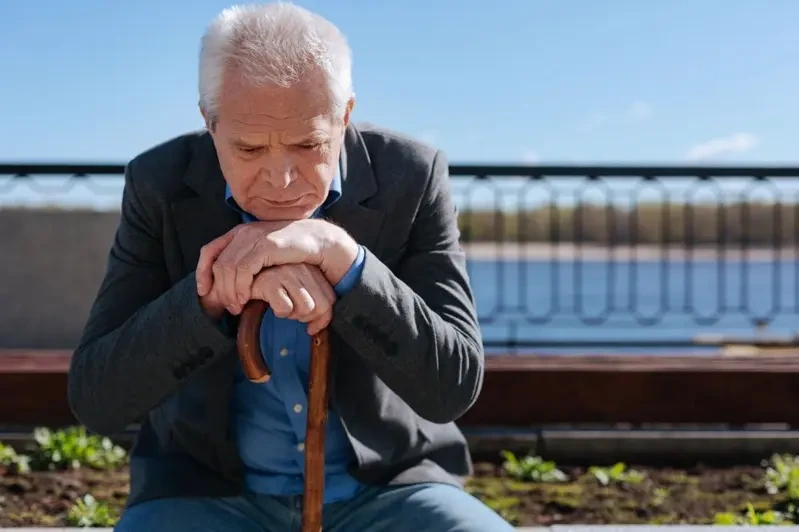
When an elderly family member who once cherished Sunday gatherings begins leaving food on their plate, or an older neighbor who used to bake every week loses all interest in cooking, those around them often dismiss it as simply a part of getting old. In reality, the situation is far more complex. According to Yahoo News, a decline in appetite among the elderly is not merely an inevitable fact of life; researchers and clinicians now recognize it as a distinct—and often treatable—medical condition. Understanding the underlying causes is the first step toward addressing the issue.
Addressing “Anorexia of Aging”
In 1988, gerontologist John Morley coined the term “anorexia of aging” to describe a loss of appetite or a lack of desire to eat, stemming from the physiological, psychological, and social changes associated with the aging process. Although “anorexia of aging” is highly prevalent, it is frequently overlooked by clinicians. Even more concerning is the common, yet misguided, belief that it is an unavoidable and normal aspect of aging.
A 2025 study found that the global pooled prevalence of “anorexia of aging” is approximately 22.7%—a figure that has remained relatively stable between 2011 and 2024. This means that more than one in five older adults worldwide is affected, with the rate rising to as high as one in three among those who are hospitalized. The study revealed that individuals diagnosed with “anorexia of aging” face an annual mortality rate of about 22%, compared to roughly 4% for those without the diagnosis—suggesting that the condition may increase the risk of death by more than fivefold. Below are eight factors that contribute to “anorexia of aging”:
- Altered Signals from the Stomach
A primary reason older adults may feel full prematurely is a diminished capacity for “receptive relaxation” in the upper part of the stomach (the gastric fundus), which causes the lower part of the stomach (the antrum) to fill up too quickly. Additionally, an increase in both the levels and the efficiency of cholecystokinin (CCK)—a hormone that signals satiety—also plays a role in “anorexia of aging.” In short, the stomach fills up more quickly, and the brain receives “fullness” signals sooner than expected; meanwhile, the body’s drive to eat appears to diminish with age.
A reduction in food intake may stem from a weakened drive to eat, or from satiety signals that act more rapidly or potently. Because these are physiological shifts rather than personal choices, reversing them—without first identifying the root cause—is often extremely difficult.
- Decline in Taste and Smell
The senses of taste and smell play a critical role in food preferences, nutritional intake, and appetite. However, both the aging process and various diseases can negatively affect these senses, causing once-enticing food to become bland, unappealing, or even repulsive. A primary physiological change associated with aging is the loss or decline of olfactory and gustatory (smell and taste) functions. Such changes diminish one’s interest in food, leading to reduced food and nutrient intake, which in turn increases the risk of health deterioration.
A diminished appetite, impaired taste and smell, and slower gastrointestinal signaling are all factors that contribute to “anorexia of aging.” When eating is no longer a source of pleasure, it quickly becomes a chore; for many older adults, the sensory gratification that once motivated them to eat fades as the years go by.
- Medications: A Major, Yet Often Overlooked, Factor
The side effects of medications can alter one’s sense of taste or smell, or cause dry mouth and constipation—all of which are linked to a reduced appetite. Many older adults take multiple medications daily, which can have a significant impact on their desire to eat. A loss of appetite is particularly associated with polypharmacy (the use of multiple drugs); other contributing factors include advanced age, being female, and having chronic kidney disease.
Many commonly prescribed medications have side effects that can cause or exacerbate malnutrition. Dry mouth—resulting from reduced saliva production—and constipation are highly prevalent among older adults, particularly those taking medications such as anticholinergics. When an older adult experiences a loss of appetite, reviewing their complete medication record is one of the most effective starting points.
- The Impact of Depression on Appetite
Depression—often linked to the loss or deterioration of one’s social network—is a common mental health issue among older adults and a significant cause of poor appetite. There is a profound connection between mood and food intake; however, because depression is frequently underdiagnosed in the elderly population, it is easily overlooked. A study published in the journal BMC Geriatrics found that even among older adults with good nutritional status, higher scores on the Geriatric Depression Scale are significantly associated with a reduced appetite.
A 2024 study indicated that poor sleep quality, low mood, and more severe pain are all linked to a loss of appetite in the daily lives of older adults. These factors are often intertwined, creating a powerful, compounding effect that diminishes the desire to eat.
- Loneliness and Eating Alone
Appetite is a key determinant of an older adult’s nutritional status and overall health. A decline in appetite can lead to various adverse health outcomes, including frailty, sarcopenia (muscle loss), and increased mortality. The influence of one’s social environment on eating behavior is far more profound than most people realize. A recent study found a clear link between feelings of loneliness and a reduced appetite, whereas the size of one’s social network did not show a significant correlation with appetite.
Research confirms that loneliness in older adults is linked to appetite—a connection that is more pronounced than that of social isolation alone. Sharing a meal with others provides both motivation and enjoyment; when this social element is removed, the drive to eat often diminishes significantly.
- Dental Issues and Oral Health
Physical factors—such as poor dental health or ill-fitting dentures—as well as age-related changes in taste and smell, can influence the food choices of older adults and limit both the variety and the quantity of food they consume. If consuming certain foods causes pain or difficulty, it is natural to begin avoiding them. Furthermore, physical impairments—such as poor oral health, difficulty chewing or swallowing, and limited mobility—can lead to a further reduction in food intake.
Older adults may experience dental issues, dry mouth, or challenges in using eating utensils, chewing, or swallowing. These problems often accumulate over the years and may even come to be viewed as “normal” by the individuals themselves or their caregivers; however, if left unaddressed, they can severely compromise nutritional intake.
- Chronic illnesses can directly suppress appetite
Chronic conditions such as cancer, diabetes, and Alzheimer’s disease can suppress appetite in older adults; the use of certain medications—or combinations of medications—can have the same effect. While these conditions influence appetite through different mechanisms, they all ultimately result in a weakening of the body’s hunger signals. Because cognitive impairment is frequently associated with changes in eating behavior, individuals with dementia may not only lose the ability to express their dietary choices and preferences, but may also experience shifts in their appetite.
Among older patients enrolled in Medicare who have a formal diagnosis of anorexia (loss of appetite), the most common co-occurring conditions include chronic lung disease, dementia, and peripheral vascular disease. This underscores the fact that a diminished appetite is not an isolated issue, but rather one that is deeply intertwined with age-related health conditions.
- A lack of physical activity creates a vicious cycle
Reduced physical activity is considered a potential factor contributing to the decline in appetite that often accompanies aging. When the body burns fewer calories, it naturally generates less hunger; the lower the level of physical activity, the weaker the sensation of hunger becomes, which in turn leads to a further reduction in food intake.
发送反馈